
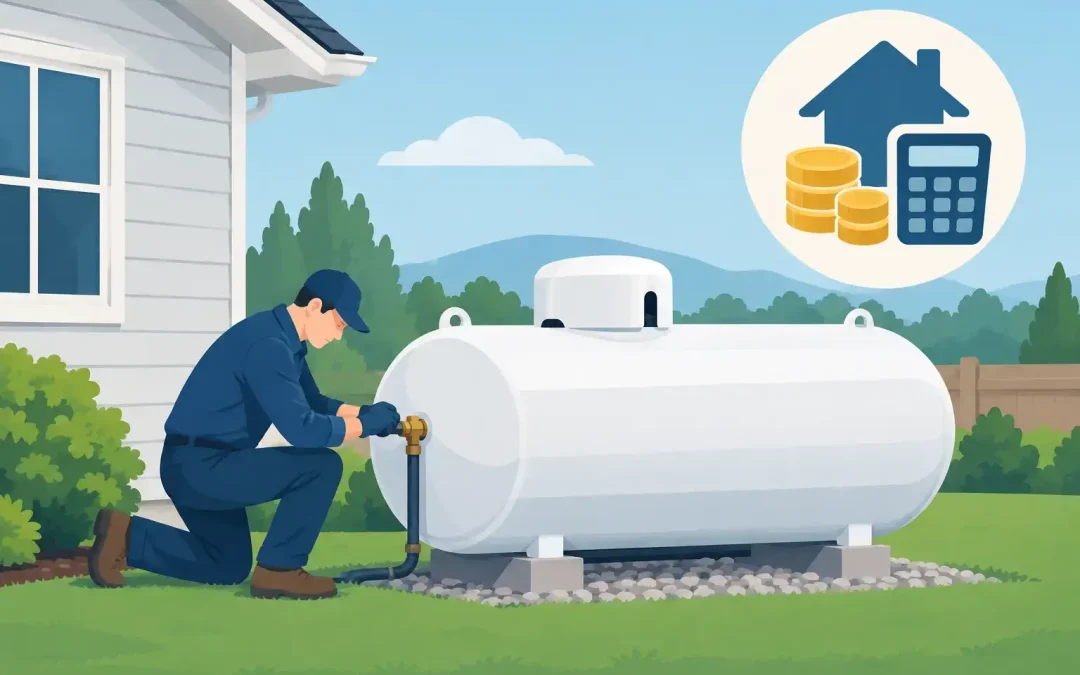
The first hard freeze is a poor time to find out your propane system needs more planning. Propane tank installation cost is not one flat number because every property, heating load, tank location, and service connection is different. A clear estimate should account for the whole system, not just the tank, so your home has dependable fuel when Wisconsin and Michigan winter weather settles in.
For many homeowners, a professionally installed aboveground propane system may fall in the range of several hundred to a few thousand dollars, depending on the scope of work. Underground installations and properties that need extensive trenching, a long gas line, or additional equipment can cost several thousand dollars or more. The best way to budget is to understand what is included in the quote and which site conditions can change it.
What Is Included in Propane Tank Installation Cost?
A propane installation is a safety-focused project. The tank is one part of the system, but it must work correctly with your home’s fuel line, appliances, regulators, and delivery access.
A complete estimate commonly includes the tank arrangement, delivery and placement, regulators, exterior gas piping, testing, and system startup. Depending on the property, it may also include excavation, trenching, appliance connections, permits, and coordination with local inspection requirements.
Some propane providers offer tanks through a lease or fuel-supply agreement rather than requiring a customer to purchase a tank outright. That can reduce the upfront cost, but customers should ask how the arrangement works, what service is included, and whether there are fuel-purchase requirements. Owning a tank may offer more flexibility, while a provider-owned tank can simplify maintenance responsibility and replacement planning.
The lowest initial price is not always the best value. A system that is properly sized, clearly documented, and backed by reliable delivery and emergency support can prevent costly disruption later, especially when temperatures drop.
The Biggest Factors That Change Your Estimate
Tank size and fuel demand
The right tank size depends on how propane will be used. A home using propane only for a range or water heater has different needs than a home relying on propane for central heat, hot water, a fireplace, and a standby generator.
Common residential tank sizes include 120-gallon, 250-gallon, 500-gallon, and 1,000-gallon options. Larger tanks generally cost more to install or purchase, but they can mean fewer deliveries and more reserve fuel during peak heating season. A qualified provider can review your appliances, square footage, insulation, household size, and expected winter use before recommending a tank.
Aboveground or underground placement
Aboveground tanks are often the more economical option because they require less excavation and are easier to access for inspections, service, and replacement. They do need a suitable location that meets required distances from buildings, ignition sources, property lines, and other features.
An underground tank can preserve the look of a yard and protect the tank from surface activity, but it requires excavation, corrosion protection, and careful access planning. It is usually a higher-cost installation. Underground placement may make sense when appearance, limited yard space, or property layout makes an aboveground location less practical.
Distance from the tank to the home
The farther the tank sits from the home or building, the more piping and trenching may be needed. A long run can add material and labor costs, particularly when the route crosses a driveway, landscaped area, rock, or difficult terrain.
This is why an on-site review matters. A technician can identify the safest practical route before work begins rather than making assumptions from a map or a quick phone description.
Site access and ground conditions
Tank delivery requires a safe path for the delivery vehicle and equipment. Narrow entrances, steep grades, soft ground, overhead obstacles, and limited turning space can affect placement options. In northern Wisconsin and Michigan, frozen ground, snow cover, and spring mud can also influence project timing.
A good installation plan considers year-round access. The tank needs to be reachable not only on installation day, but also for routine deliveries, inspections, and service calls.
Existing equipment and appliance work
If you are switching from another fuel source, replacing an older propane system, or adding new appliances, your estimate may include more than tank installation. Gas piping may need to be added or upgraded. Appliances may need conversion, connection, or safety testing. Older regulators and lines may need replacement to meet current requirements.
These costs are not unnecessary extras. Correct pressure regulation and leak testing are essential to safe, reliable operation.
Costs That Are Easy to Overlook
When comparing propane installation quotes, ask whether the following items are included. They can make a meaningful difference in the final total:
- Site preparation, excavation, trenching, and restoration
- Permits, inspections, and local code requirements
- Exterior and interior gas-line work
- Regulators, protective piping, and other required safety components
- Appliance connection, conversion, and testing
- Initial propane delivery or tank fill
- Ongoing tank monitoring, service, and emergency support
Not every project needs every item. For example, a straightforward replacement at an existing approved location may require much less work than a new installation at a rural home with no prior propane service. Asking for an itemized estimate helps you compare the actual scope, not just the bottom-line number.
How to Keep Installation Costs Predictable
The most useful step is to plan before the heating season. Scheduling a site visit early gives you more flexibility for placement, permits, ground conditions, and installation timing. It also helps avoid rushed decisions when fuel is needed quickly.
Share a complete picture of how you expect to use propane. Mention every appliance, planned addition, outbuilding, or generator that may rely on the system. Choosing a tank based only on today’s smallest need can create avoidable changes later.
It is also worth asking how fuel delivery will be managed after installation. Automatic delivery can reduce the risk of a runout, while tank monitoring gives homeowners a practical view of fuel levels from a smartphone. Budget payment plans may help spread seasonal heating costs into more manageable monthly payments. These services do not change the installation itself, but they can make the long-term cost of propane easier to manage.
Why Professional Installation Matters
Propane is a dependable home energy source when the system is installed, maintained, and supplied correctly. Professional installation protects the people in your home and helps protect your investment. Trained technicians understand placement requirements, pressure settings, piping practices, leak checks, and the details that allow a system to perform safely through changing weather.
It also gives you a clear point of contact if something needs attention. Local support is especially valuable during a cold-weather interruption, when a service question cannot wait for normal business hours. Ritchie Oil and Propane has served regional homes and businesses since 1962 with installation, delivery, monitoring, and emergency support designed around that responsibility.
Questions to Ask Before You Approve an Estimate
Before scheduling the work, make sure you understand whether the tank is leased or customer-owned, what size is recommended, and why that size fits your expected use. Confirm where the tank will be placed, whether your quote includes gas lines and appliance connections, and whether permits or inspections are part of the price.
Ask about delivery access in winter, ongoing service responsibilities, and what happens if your fuel use changes. If a tank-monitoring option is available, ask whether it is included and how you will receive alerts. A provider should be comfortable walking through these answers in plain language.
A propane installation should leave you with more than a tank beside or beneath your property. It should leave you with a safe fuel system, a dependable delivery plan, and confidence that help is available when your home needs it most.
Lease a Tank from Ritchie
Lease a tank, sign up for automatic delivery and autopay, and let our family-owned team keep you warm all winter. For more information, contact us or give us a call.