
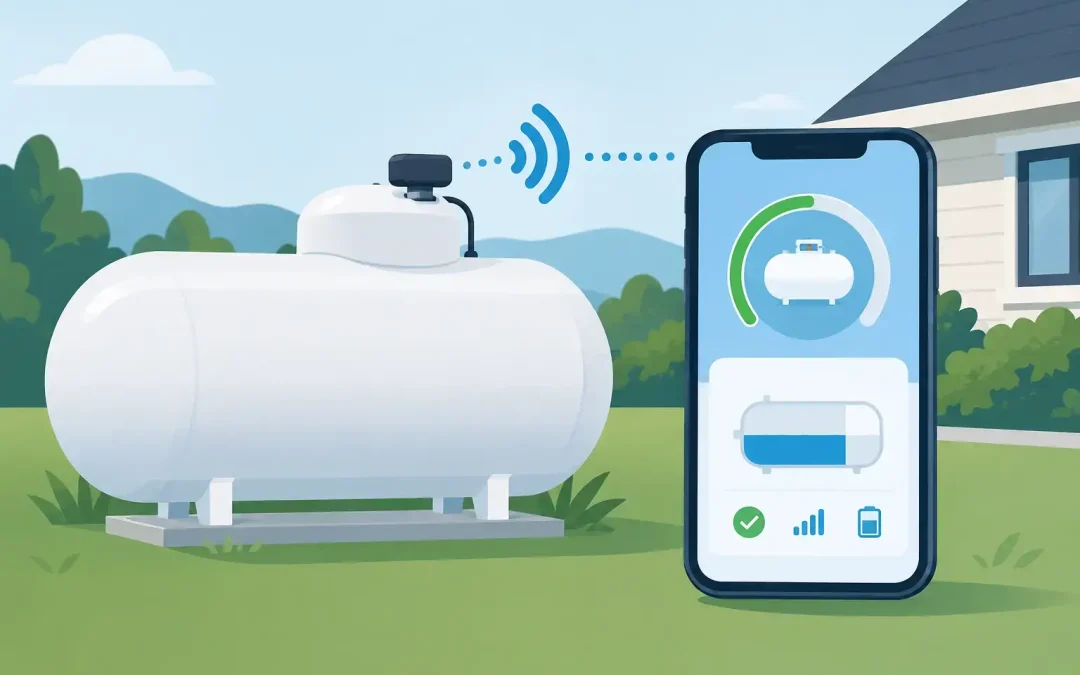
A propane tank monitoring app answers one of the most common questions propane customers have: How much fuel is left? Instead of walking out to check a tank gauge in snow, rain, or darkness, you can view your estimated level from your smartphone. For Wisconsin and Michigan households that depend on propane for heat, hot water, cooking, or backup power, that visibility can bring real peace of mind.
The app is not meant to replace the people who deliver and service your fuel. It is a practical tool that works alongside automatic delivery, trained local drivers, and emergency support. You can see what is happening at your tank, while your fuel provider helps make sure a low reading does not become a cold house.
How a propane tank monitoring app works
A monitor is installed on or connected to the propane tank. It reads the tank’s fuel level and sends that information through a cellular connection to a secure account or mobile app. When you sign in, you can see an estimated percentage of fuel remaining without needing to be at the property.
Most customers do not need to think about the equipment once it is installed. The useful part is the information: a current tank-level estimate, a view of recent usage, and, depending on the setup, notifications when the fuel level reaches a chosen point. The delivery team can also use monitoring data to plan deliveries more accurately.
Tank readings are estimates, not a promise that fuel will last until a certain date. Outdoor temperature, thermostat settings, appliance use, home insulation, and whether the property is occupied can all change consumption quickly. A sharp northern Wisconsin cold snap can use far more propane than a mild week, which is why monitoring is most valuable when paired with reliable delivery service.
Why fuel visibility matters in winter
A propane runout is more than an inconvenience. When a heating system stops during freezing weather, a home can become uncomfortable quickly and may face risks such as frozen plumbing. Restoring service may also require a qualified technician to complete safety checks before appliances are put back into operation.
A propane tank monitoring app gives you an earlier signal that attention is needed. That is especially helpful for customers who travel, own a seasonal home, manage a rental property, or care for an older family member who may not regularly check fuel levels. It can also help farm and business owners keep an eye on fuel use at locations that are not part of their daily routine.
Automatic delivery already removes much of the guesswork. Monitoring adds another layer of reassurance because the delivery schedule can be informed by actual tank data instead of relying only on past usage patterns. For many customers, the best setup is not choosing one or the other. It is using both.
What to look for in the app
The right app should be easy to understand when you need it. A clear tank percentage is more useful than a screen crowded with technical details. It should also be easy to access from the phone you carry every day, with account information protected by a secure sign-in.
Useful features may include:
- Current estimated propane level
- Recent usage history to help spot changes in consumption
- Low-level notifications or alerts
- Delivery status or account information, when available
- Access for more than one household decision-maker
Features vary by provider and account type, so it is worth asking how monitoring works with your delivery plan. Some customers want an app mainly for reassurance. Others use it to follow fuel use at a second home, agricultural building, or commercial location. The best arrangement depends on how the property uses propane and how often someone is there to notice a change.
Monitoring supports better delivery decisions
A tank monitor does not make winter weather predictable, but it can make delivery planning more informed. When a provider can see that fuel levels are dropping, deliveries can be scheduled around real demand. This is particularly valuable in rural areas, where a route may cover long distances and winter road conditions can change fast.
For the customer, this can mean fewer unnecessary gauge checks and less worry about estimating when to call. For the delivery team, it helps prioritize tanks that need attention soon and organize routes efficiently. The result is a more dependable fuel relationship, not simply another app on your phone.
There are limits to keep in mind. Cellular coverage can affect how often a monitor reports data, and a reading may not update immediately in every situation. Physical access also matters. If a driveway is blocked by snow, gates are locked, or the tank area is inaccessible, even the best monitoring technology cannot complete a delivery. Keeping the path to the tank clear and letting your provider know about access changes still makes a difference.
A useful tool for second homes and busy households
Many propane customers do not live at every property they heat. A cabin, rental, workshop, or seasonal residence may sit empty for days or weeks at a time. Checking the fuel level remotely gives property owners a better picture of what is happening between visits.
That does not mean you need to watch the app constantly. The benefit is knowing you can check when a cold front moves in, when you are away on business, or when a family member calls with a question about the heat. It turns a tank level from something you can only see standing outside into information you can review from almost anywhere.
For a busy household, that small convenience matters. Winter brings enough to manage without adding fuel-gauge checks to the list. If propane is already on automatic delivery, monitoring can provide a welcome confirmation that the plan is working as intended.
Pair technology with local service
Digital tools are most helpful when there is a knowledgeable team behind them. A low-level alert is useful, but customers also need someone who understands delivery routes, winter conditions, equipment safety, and the urgency of a heating issue. That is where full-service propane support matters.
Ritchie Oil and Propane combines tank-monitoring technology with automatic delivery options, trained service personnel, and around-the-clock emergency response. Customers can use tools such as the Nee-Vo App and MyFuelPortal for convenient account access while still having a local team to call when a situation needs personal attention.
If you are considering monitoring, ask a few practical questions before enrolling. Is the monitor included with your delivery arrangement or available for an added charge? Will you receive alerts, and at what tank level? Who should be listed for account access? How does the provider handle a low tank reading during severe weather? Clear answers will help you choose a setup that fits your property and your comfort level.
Keep the system working for you
A propane tank monitoring app is most useful when the account details stay current. Let your provider know if your phone number changes, if another family member should receive notices, or if the property’s propane use changes substantially. Adding a new appliance, adjusting how often a property is occupied, or changing the thermostat setting can all affect fuel demand.
It is also wise to treat alerts as a prompt to check your plan, not as a reason to wait until the tank is nearly empty. If you are not on automatic delivery, contact your provider early when the level is getting low. If you are on automatic delivery and see a reading that concerns you, a quick call can confirm the delivery schedule and give you confidence about what comes next.
The simplest benefit of monitoring is also the one that matters most: you do not have to wonder whether there is enough fuel to keep your home comfortable. A quick look at your phone, backed by dependable local service, can make a long winter feel a little more manageable.