
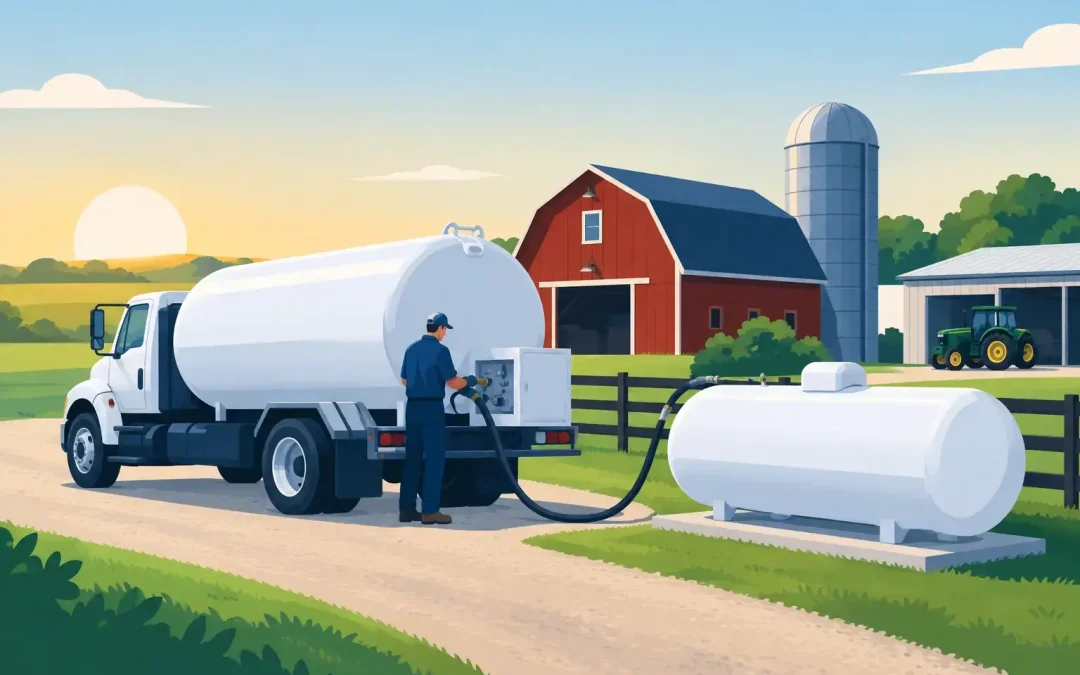
A cold snap does not wait for a convenient time on the farm. When a heater, grain dryer, livestock building, shop, or other critical equipment depends on fuel, reliable farm propane delivery helps keep daily work moving. The right delivery plan is not simply about getting propane to the property. It is about protecting animals, equipment, schedules, and the people doing the work.
For agricultural operations in Wisconsin and Michigan, fuel needs can change quickly with weather, harvest timing, and building use. A dependable local propane partner helps you plan ahead, watch supply levels, and get support when conditions are working against you.
Why Farm Propane Delivery Matters
Propane is often a working part of a farm operation, not just another utility bill. It may provide heat for livestock areas, power crop-drying equipment, warm workspaces, supply hot water, or support seasonal buildings. When the supply runs low, the interruption can create more than inconvenience.
A fuel runout can mean lost time during a busy stretch, uncomfortable or unsafe conditions for animals, and added stress during severe winter weather. It may also require equipment checks before service can be restored. Avoiding that situation starts with a delivery plan built around how your farm actually uses propane.
A provider should take the time to understand your operation. A steady, year-round use pattern needs a different approach than a farm with major demand during harvest or a short but intense cold-weather season. Delivery schedules should account for your typical use while leaving room for the unexpected.
Automatic Farm Propane Delivery Reduces Guesswork
Checking fuel levels can be one more task competing with equipment maintenance, fieldwork, animal care, and paperwork. Automatic delivery removes much of that burden. Your propane supplier tracks expected use, weather patterns, and delivery timing so fuel can be scheduled before the supply gets too low.
This approach is especially valuable when roads are difficult, temperatures fall fast, or the farm is busiest. Instead of estimating whether there is enough fuel to make it through the next week, you have an established replenishment plan supported by a local delivery team.
Automatic delivery is not identical for every customer. Farms with predictable building heat may need only routine scheduling. Operations with seasonal drying or temporary heat requirements may need closer communication before demand rises. A good provider adjusts the plan as your operation changes rather than treating every account the same.
Tank Monitoring Adds Visibility Between Deliveries
Automatic delivery works best when it is supported by accurate information. Connected tank monitoring gives both the customer and the propane provider a clearer view of supply levels. From a smartphone, you can check available fuel without walking out to the tank during rain, snow, or a packed workday.
Monitoring can also help identify unusual usage sooner. If consumption rises more quickly than expected, the cause may be colder weather, a change in building use, or equipment that needs attention. Early awareness gives you time to ask questions and plan rather than discovering a problem when fuel is already low.
For farms with several buildings or seasonal demand, monitoring is practical because it replaces assumptions with current information. It does not eliminate the need for a responsive supplier, but it gives the delivery team another tool to help prevent a runout.
Plan for the Times Your Farm Uses the Most Fuel
The best time to discuss propane needs is before the busiest season arrives. For many agricultural customers, that means reviewing usage before winter, before harvest, or before bringing seasonal buildings into service. A short conversation can make a meaningful difference when demand increases.
Consider what will change during the coming months. Will livestock housing need more consistent heat? Will grain drying create a sharp increase in propane use? Will a shop, greenhouse, or temporary work area be used more often? Letting your propane provider know early helps them prepare the right delivery schedule and service support.
It is also wise to keep the tank area accessible. Delivery drivers need a safe path to the property and clear access to the tank, particularly after snowfall. Marking the location when snow is expected and keeping the route open can help prevent avoidable delivery delays.
What Dependable Farm Propane Service Should Include
A propane relationship should cover more than a delivery ticket. Agricultural customers need practical support before, during, and after fuel is delivered. When comparing service options, look for a provider that can offer:
- Automatic delivery based on your farm’s expected propane use
- Tank monitoring with convenient smartphone visibility
- Trained drivers and service technicians who put safety first
- Equipment installation, maintenance, and responsive repair support
- Emergency assistance available around the clock when urgent issues arise
These services matter because propane systems are part of your working property. If you have questions about equipment, notice a change in performance, or need help after normal business hours, you should know who to call and what support is available.
Ritchie Oil and Propane has served regional customers since 1962 with delivery, equipment service, monitoring, and emergency response designed around real-world fuel needs. For farms in northern Wisconsin and nearby Michigan communities, local knowledge can be especially valuable when winter weather or seasonal workloads make timing critical.
Safety Comes Before Convenience
Propane is dependable when it is handled correctly and the system is properly maintained. Farm properties can be complex, with multiple structures, changing traffic patterns, and equipment operating throughout the year. That makes professional installation and trained service important.
Make sure everyone who may be responsible for the property knows where the propane shutoff is located and how to contact the fuel provider. If you smell gas, leave the area immediately, avoid flames and electrical switches, and call for help from a safe location. Do not return until a qualified professional says it is safe.
Routine equipment attention also helps protect your operation. If a heater is not operating properly, a line appears damaged, or a tank area has been affected by construction activity or vehicle traffic, contact your propane provider promptly. Addressing a concern early is usually easier than dealing with an interruption when conditions are already difficult.
Manage Fuel Costs With a Clearer Plan
Farm expenses are rarely fixed, and propane use can rise when the weather is hardest or operations are most active. A budget payment plan can spread fuel costs over predictable monthly payments, helping reduce the impact of large seasonal bills.
The right option depends on your cash-flow needs and fuel-use pattern. Some operations prefer to pay as deliveries are made, while others value a monthly plan that makes heating costs easier to anticipate. A customer portal or mobile app can also help you review account information, payments, and delivery activity without adding another phone call to the day.
Cost planning works best alongside automatic delivery and monitoring. Together, these services make fuel use more visible and help reduce last-minute delivery concerns, which can be especially helpful when a busy season leaves little room for surprises.
Choose a Delivery Partner That Knows Your Operation
The lowest-priced delivery on a single day is not always the best value for a working farm. Consider whether the provider can deliver consistently, respond when service is needed, provide trained technicians, and offer tools that make fuel management easier. Those details affect your time, your comfort, and your ability to keep the operation running.
Ask how automatic delivery is managed, whether monitoring is available, and what happens if you need emergency assistance. Be clear about seasonal demand, building changes, and any upcoming projects that could affect propane use. A provider that listens can build a plan that fits instead of asking your farm to fit a standard schedule.
When propane supports the work that cannot wait, dependable planning provides real peace of mind. Set up delivery before the next busy season, keep communication open, and give your farm one less thing to worry about when the weather turns.
Keep Your Farm Supplied
Lease a tank, sign up for automatic delivery and autopay, and let our family-owned team keep you warm all winter. For more information, contact us or give us a call.