
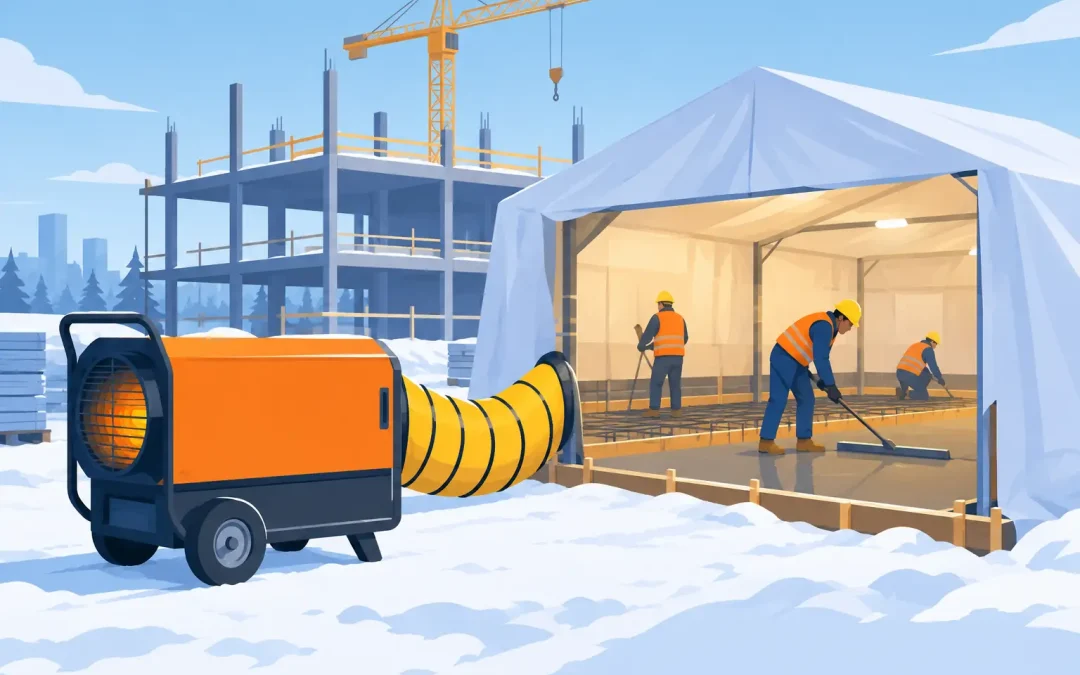
A frozen jobsite can bring productive work to a stop fast. Concrete cures differently, finishes fail to set, equipment becomes harder to operate, and crews lose valuable time trying to stay warm. Construction temporary heat gives contractors a practical way to protect the work, the schedule, and the people responsible for both.
The right heating plan is not simply about bringing a heater to the site when temperatures drop. It requires the right equipment, a dependable fuel supply, safe placement, and a provider prepared to respond when conditions change. In Wisconsin and Michigan winters, that planning can make the difference between a controlled workday and an expensive delay.
Why Construction Temporary Heat Matters
Cold weather affects far more than crew comfort. Many materials have temperature requirements for installation, curing, drying, or storage. Paint, flooring adhesives, drywall compound, masonry products, concrete, and other finishes can be damaged when temperatures fall below recommended levels.
Temporary heat also helps protect the building itself. Keeping an enclosed structure above freezing can reduce the risk of frozen plumbing, damaged equipment, and moisture problems caused by uneven temperatures. On renovation work, heat may be needed before permanent systems are ready or before an existing system can safely carry the full demand of the project.
For project managers, the cost of heat needs to be weighed against the cost of downtime. A delayed pour, ruined material, lost labor hours, or missed deadline can quickly cost more than a properly planned temporary heating setup.
Start With the Building and the Work Schedule
Every jobsite has different heating needs. A framed structure with open walls and roof gaps will require a different approach than a mostly enclosed commercial build-out. Ceiling height, square footage, insulation, door traffic, outdoor temperature, wind exposure, and the type of work underway all affect how much heat is needed.
It also matters when the heat will be used. Some projects need steady heat around the clock to protect materials or maintain curing temperatures. Others need warmth during working hours, with lower overnight temperatures acceptable once the space is secured. A clear plan prevents fuel from being used where it will not provide a meaningful benefit.
Before equipment arrives, contractors should identify the areas that must be heated first. This may include an active work zone, a curing area, a mechanical room, or a section where temperature-sensitive materials are stored. Heating the entire footprint is not always necessary, especially early in construction when the building envelope is incomplete.
Direct and Indirect Heat Serve Different Needs
The best heater depends on the work being done inside the structure. Direct-fired equipment is often useful where large volumes of heat are needed quickly and ventilation is adequate. It can be an efficient choice for open or well-ventilated areas, but it introduces combustion byproducts and moisture into the space.
Indirect-fired heat keeps combustion separate from the heated air. Heated air is delivered through ducting, while exhaust remains outside. This option can be a better fit for enclosed spaces, finish work, drying requirements, or areas where indoor air quality and moisture control are especially important.
There is no single answer for every job. A provider should help match the heating approach to site conditions, local requirements, and the materials being installed. Choosing based on heater size alone can create problems later.
Fuel Planning Is Part of the Job Plan
Temporary heat is only useful while fuel is available. Cold snaps, wind, and changing building conditions can increase consumption quickly, especially when a structure is still open to the elements. Waiting until fuel levels are low creates unnecessary risk for crews and project schedules.
A dependable construction temporary heat plan includes regular delivery coordination and a clear understanding of anticipated use. Contractors should share the project timeline, expected operating hours, equipment type, and changes in building enclosure with their fuel provider. If additional heaters are brought on site or more areas become enclosed, fuel demand may shift significantly.
Automatic delivery and tank monitoring can take much of the guesswork out of supply management. Connected monitoring gives visibility into fuel levels, while scheduled replenishment helps prevent a runout during a busy workweek or a stretch of severe weather. That support is especially valuable on remote sites or projects where supervisors are managing several responsibilities at once.
At Ritchie Oil and Propane, local delivery support and around-the-clock emergency response are built around the realities of winter work. Contractors need more than fuel on paper. They need a partner who understands that heat loss can affect every trade on the site.
Keep Temporary Heat Safe on the Jobsite
Temporary heating equipment must be installed, operated, and monitored with care. The safest setup follows manufacturer requirements, applicable building and fire codes, and the direction of trained professionals. Shortcuts with heater placement, ventilation, or fuel connections can put workers, property, and the project at risk.
A sound site safety plan should address these core needs:
- Keep heaters clear of combustible materials, debris, temporary coverings, and active traffic areas.
- Provide the ventilation required for the equipment and the conditions inside the building.
- Use carbon monoxide detection where appropriate, especially in enclosed or occupied work areas.
- Protect fuel lines, connections, and equipment from vehicle damage, tampering, and weather exposure.
- Make sure workers know who is responsible for checking the equipment and reporting concerns.
Propane equipment and fuel connections should be handled by qualified personnel. The same applies when a heater must be moved, reconnected, or taken out of service. A jobsite changes quickly, and what was safe during framing may not be safe once interior work, temporary walls, or stored materials are added.
Watch Humidity, Not Just Temperature
Heat alone does not always create the right environment for finish work. Some heating methods can add moisture to the air, which may slow drying or affect materials such as wood, drywall, flooring, and paint. In those situations, contractors may need to consider indirect heat, ventilation, dehumidification, or a combination of measures.
Temperature should also be monitored where the work is taking place, not only near the heater. A warm area by the equipment does not guarantee that far corners, exterior walls, or slab surfaces have reached the required temperature. Consistent conditions help protect workmanship and reduce rework.
Plan for Weather Changes and Site Changes
Winter conditions can change overnight. A heating setup that performs well at 30 degrees may struggle when temperatures drop below zero or high winds expose gaps in the building. When the forecast turns, review fuel levels, heater capacity, enclosure conditions, and access for delivery vehicles.
The jobsite itself will change as construction progresses. Doors and windows may be installed, walls may be closed, and permanent HVAC systems may come closer to operation. These changes can reduce heat loss, but they can also alter ventilation and safety needs. Regular check-ins keep the temporary heating plan aligned with the stage of the project.
Clear communication is particularly important before weekends and holidays. If the project requires continuous heat, establish who will receive fuel notifications, who can grant site access, and who can respond if equipment needs attention. Those details are easy to overlook until a late-night temperature drop puts the project at risk.
Choose Support That Can Keep Up
Construction schedules do not always follow normal business hours, and weather certainly does not. When selecting a temporary heat provider, look beyond the initial delivery. Ask whether the provider can coordinate fuel supply, support safe equipment installation, monitor usage, and respond when conditions require quick action.
A reliable local partner understands that temporary heat is connected to every part of a winter project: worker safety, material performance, budget control, and schedule protection. With the right equipment, fuel plan, and support in place, cold weather becomes a condition to manage rather than a reason for work to stop.
When the forecast turns cold, a quick conversation before the next phase of work can help keep the jobsite warm, supplied, and ready for the crews counting on it.
Need Temporary Heat for Your Jobsite?
Lease a tank, sign up for automatic delivery and autopay, and let our family-owned team keep you warm all winter. For more information, contact us or give us a call.