
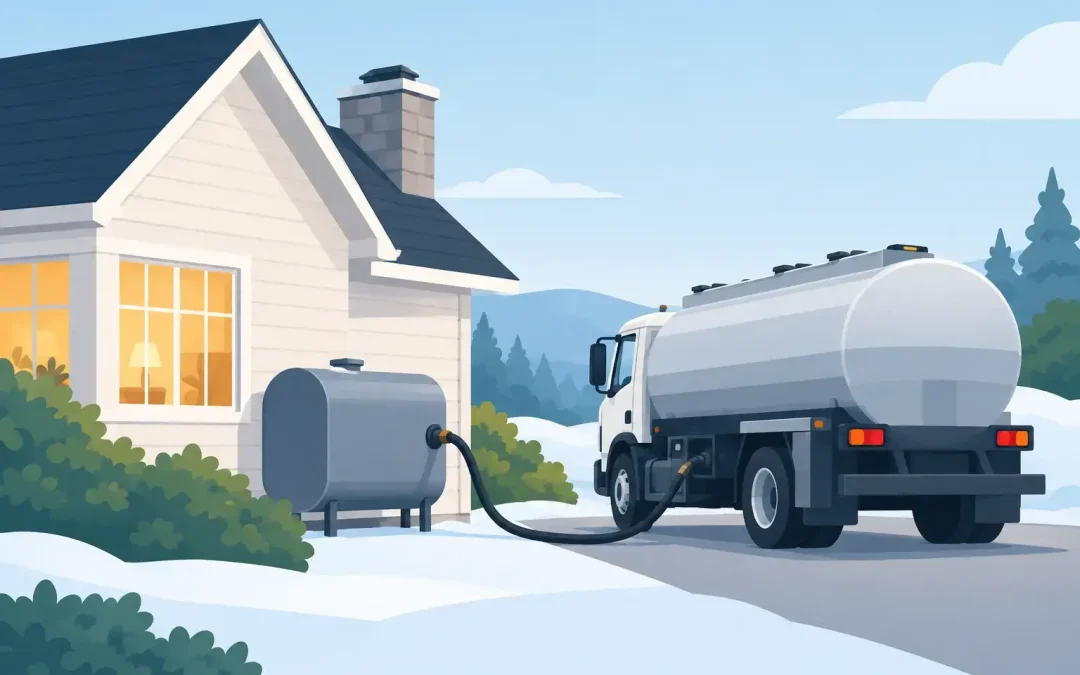
A heating oil minimum delivery can feel frustrating when you only need enough fuel to get through a short stretch of cold weather. But minimums are not arbitrary. They help local fuel providers schedule safe, efficient deliveries across rural roads, neighborhoods, and long winter routes – while helping customers receive dependable service when they need it most.
For homeowners in Wisconsin and Michigan, the better question is not simply, “What is the minimum?” It is, “How can I make sure I have enough oil before my tank gets too low?” Understanding how delivery minimums work can help you plan ahead, avoid emergency situations, and keep your home comfortable through changing weather.
Why Heating Oil Minimum Delivery Requirements Exist
Most heating oil companies set a minimum number of gallons for a scheduled delivery. The exact amount differs by provider, delivery area, season, and current operating conditions. A delivery truck must travel with trained personnel, follow safe access procedures, and serve many customers across a route. Minimums help make those routes practical and keep regular service available for the entire community.
This matters even more during a Wisconsin cold snap. Demand rises quickly, roads may be difficult, and drivers must prioritize deliveries carefully. A provider that maintains sensible delivery standards is better positioned to keep its trucks moving, respond to customers who need fuel, and provide dependable service throughout the season.
A minimum delivery is also tied to the practical realities of a heating oil tank. Ordering a very small amount too often can create more scheduling pressure and may cost more over time than arranging a properly timed delivery. If your tank has room for a standard delivery, filling it at the right point is usually the simpler approach.
What Can Affect a Heating Oil Minimum Delivery?
There is no single minimum that applies to every household or every delivery. Before placing an order, ask your provider what applies at your address and whether seasonal conditions affect availability. Several factors can influence the answer:
- Your location and delivery route: Homes in remote areas may have different routing considerations than homes near a regular delivery corridor.
- Time of year: During peak heating season, providers may adjust scheduling practices to serve the greatest number of customers safely and promptly.
- Tank access: A clear, safely accessible fill pipe and driveway help drivers complete deliveries efficiently, especially after snow or ice.
- Your account and delivery plan: Automatic delivery customers may be scheduled based on usage patterns and tank level rather than placing individual orders.
- The type of request: A routine scheduled delivery and an urgent no-fuel call are handled differently, particularly when severe weather affects travel.
The most reliable source is your local fuel provider. A quick conversation before your tank gets low can clarify the current minimum, delivery timing, payment options, and whether your account is a good fit for automatic service.
Do Not Wait for the Gauge to Reach Empty
Heating oil gauges are helpful, but they are not a reason to wait until the last possible moment. A common rule of thumb is to contact your provider when the tank is around one-quarter full. That gives the delivery team time to add you to a route and helps protect your household from a runout if temperatures drop or your usage rises unexpectedly.
Your oil use can change quickly. A week of below-zero nights, more people staying home, a guest visiting, or a heating system working harder than usual can all shorten the time remaining in your tank. Homes with less insulation, older windows, or larger heated spaces may use fuel faster as well.
Running out of heating oil is more than an inconvenience. It can leave your home without heat or hot water, create an urgent service need, and in freezing conditions increase the risk of damage from cold indoor temperatures. Restoring service after a runout may also require additional steps to make sure your heating equipment operates safely.
If you are unsure how much fuel you have left, call before the situation becomes urgent. It is always easier to plan a delivery than to solve a fuel emergency in the middle of a winter storm.
Automatic Delivery Helps Take the Guesswork Out
For many households, automatic delivery is the most practical answer to concerns about heating oil minimum delivery. Instead of checking the gauge constantly and trying to estimate your next order, your provider tracks expected usage and schedules a delivery before your supply gets too low.
Automatic delivery is not the same as receiving fuel on a fixed date every month. A dependable provider considers your past usage, local temperatures, and the time of year to estimate when you will need more oil. Connected monitoring technology can add another layer of visibility by reporting tank levels and helping the delivery team respond to changing usage.
This approach is especially helpful for seasonal residents, busy families, older adults, and property owners who manage a home from a distance. It also provides reassurance during the weeks when winter weather makes errands and last-minute planning harder.
Automatic delivery does require good communication. Let your provider know if your household changes, if you will be away for an extended period, or if you make major changes that could affect your heating use. Those details help keep delivery estimates accurate.
How to Make Every Delivery Easier
A little preparation can help prevent delays and keep deliveries safe. In winter, maintain a clear path to the fill pipe and keep the area free of snow, ice, vehicles, branches, and other obstructions. If your driveway is difficult to navigate, communicate any access concerns when you place an order.
It is also wise to keep your account information current. Make sure your provider has the right phone number, billing details, and delivery instructions. If you use a customer portal or mobile app, check it periodically for account information, delivery updates, and payment options.
Budget plans can make heating expenses more predictable, too. Instead of carrying the full weight of a large winter delivery in one month, a budget plan may spread anticipated fuel costs across more manageable payments. Availability and terms vary, so ask your provider what options fit your household.
When a Smaller Delivery May Be Possible
There are situations where a customer may need less fuel than a standard order. Perhaps you are moving, selling a property, changing heating systems, or nearing the end of a seasonal stay. In these cases, call your provider early and explain what is happening.
A smaller delivery may be possible depending on routing, tank capacity, supply conditions, and the company’s current policy. It may involve a different delivery fee or scheduling window. The key is to ask before your fuel level becomes a problem rather than assuming a small order can be dispatched immediately.
For properties that are vacant or only used occasionally, a tank-monitoring option can be particularly valuable. It gives you clearer information about remaining fuel and helps you make decisions before cold weather creates an urgent need.
A Local Partner Makes Winter Planning Simpler
Heating oil is essential to your home’s comfort and safety, so delivery service should not be left to last-minute guesses. A provider with trained drivers, responsive office staff, and emergency support can help you understand delivery policies and make a plan that works for your household.
Ritchie Oil and Propane has served local families and businesses since 1962 with dependable fuel delivery, monitoring options, and around-the-clock emergency response. Whether you prefer to order as needed or want the reassurance of automatic delivery, the goal is the same: enough fuel in your tank, reliable support when conditions change, and one less winter worry on your mind.
If your gauge is nearing one-quarter, reach out now. A simple check-in can give you time to schedule service, confirm your delivery options, and keep your home warm when the forecast turns colder.
Running Low on Heating Oil?
Lease a tank, sign up for automatic delivery and autopay, and let our family-owned team keep you warm all winter. For more information, contact us or give us a call.