
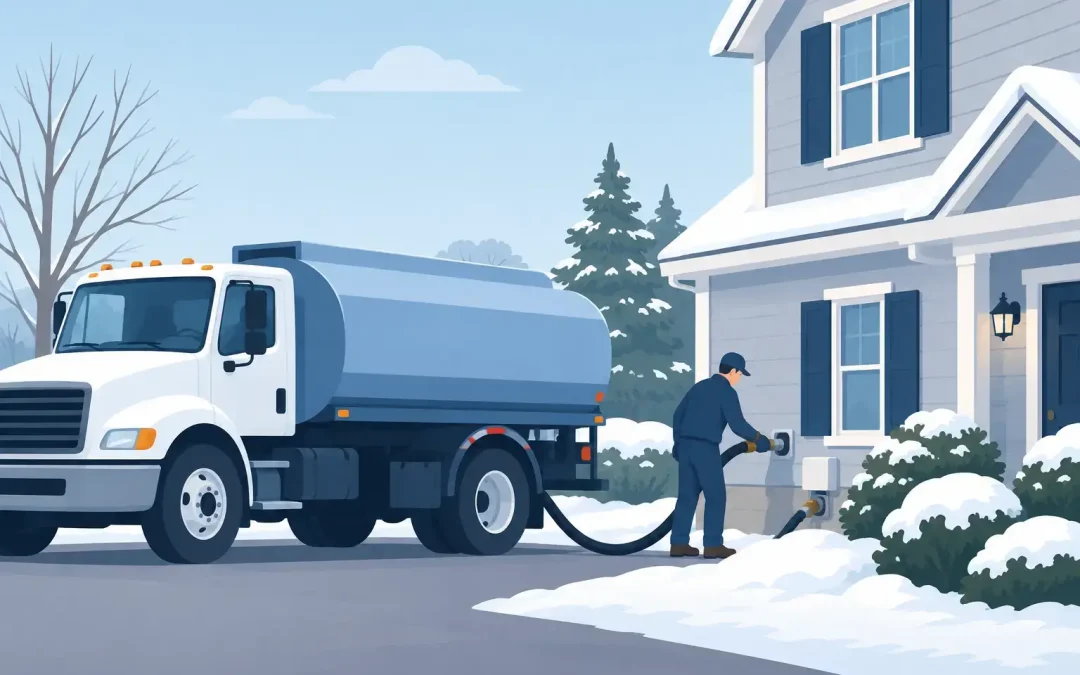
A winter fuel delivery is usually a quiet part of homeownership: a truck arrives, a trained driver connects a hose, your tank is filled, and your heat stays on. But when temperatures drop and the forecast calls for snow, knowing how is heating oil delivered can bring real peace of mind. The process is designed to keep your home supplied safely, whether you arrange deliveries as needed or enroll in automatic delivery.
For homeowners in northern Wisconsin and Michigan, reliable access matters. A well-planned delivery helps prevent a fuel runout, protects your heating system, and lets you focus on staying warm rather than watching the gauge every day.
How Is Heating Oil Delivered? The Basic Process
Heating oil is delivered by a specially equipped fuel truck operated by a trained driver. The truck carries multiple compartments of fuel, allowing the driver to serve several homes on one route. Before arriving, the provider plans deliveries based on customer orders, automatic-delivery schedules, tank-monitoring information, weather conditions, and safe road access.
At your property, the driver parks in a position that allows the delivery hose to reach your fill pipe without blocking more of the driveway than necessary. The hose is connected to the fill pipe, which is typically located outside the home and marked with a cap. Heating oil flows from the truck through the hose and into your storage tank.
The driver monitors the delivery while the tank is being filled. Once the delivery is complete, the hose is disconnected, the fill cap is secured, and the transaction is recorded. Depending on your account preferences, you may receive a printed ticket, an emailed receipt, or delivery details through a customer portal.
The actual fill often takes only a few minutes. Getting to the property safely, especially during a Wisconsin winter, is often the part that requires the most preparation and planning.
Your Heating Oil Tank and Fill Pipe
Most homes have either an indoor tank, often in a basement or utility area, or an outdoor tank located near the house. In either case, the driver normally does not need to enter your home. The outdoor fill pipe is connected to the tank and gives the driver a safe access point for delivering fuel.
A second pipe, called a vent pipe, allows air to escape from the tank as oil flows in. You may hear a whistle while the tank is filling. This sound comes from the vent alarm and generally stops when the tank reaches its safe fill level. The driver uses the equipment and delivery controls to avoid overfilling.
Heating oil is not pumped into the furnace itself. It is delivered to the storage tank, then your heating system draws fuel from that tank as needed. That is why keeping track of your tank level is so helpful, particularly when cold weather increases your household’s fuel use.
Scheduled Delivery or Automatic Delivery
There are two common ways to receive heating oil. With will-call or scheduled delivery, you contact your provider when your tank is getting low and request a delivery. This gives you direct control over when you order, but it also means you must monitor your fuel level closely and allow enough time for routing and weather delays.
Automatic delivery takes that responsibility off your daily list. Your fuel provider estimates when you will need oil using factors such as past usage, the size of your home, local temperatures, and the time of year. Many providers also use tank-monitoring technology that sends fuel-level information to help guide deliveries.
Automatic delivery is especially useful for seasonal residents, busy households, older homeowners, and anyone who does not want to risk discovering a low tank during a cold stretch. It does not mean a truck arrives on the same calendar day every month. Delivery timing changes with your usage and the weather.
At Ritchie Oil and Propane, connected monitoring and customer account tools can give customers more visibility into their fuel supply while the local team manages the details behind the delivery schedule.
What You Can Do Before a Heating Oil Delivery
Drivers need a clear, safe route from the road or driveway to the fill pipe. Small steps on your property can make a major difference when snow, ice, or poor visibility are part of the day.
Before delivery season, and after major storms when possible, make sure the following areas are accessible:
- Keep the driveway plowed and wide enough for a delivery truck to enter, turn, or back out safely.
- Clear snow and ice around the fill pipe and make sure the cap can be reached easily.
- Trim back branches or other obstacles that could interfere with truck clearance or the delivery hose.
- Make house numbers visible from the road, especially if your home is set back or located on a rural route.
- Keep gates unlocked or provide clear access instructions if the fill location is behind a gate.
If your access changes, such as construction work blocking the driveway or a new gate being installed, let your provider know before the next delivery. A quick call can help the dispatcher and driver plan around the issue instead of finding it after arriving with a loaded truck.
Why Weather Can Affect Delivery Timing
Fuel providers work hard to keep routes moving in winter, but safety comes first. Heavy snowfall, icy roads, drifting snow, downed trees, or roads that have not been plowed can delay a truck’s access to certain areas. In rural communities, a driveway that is manageable for a passenger vehicle may still be unsafe for a fully loaded fuel truck.
This is one reason it is wise not to wait until the tank is nearly empty before requesting fuel. For will-call customers, ordering early gives the provider more flexibility to fit your delivery into the route. For automatic-delivery customers, keeping driveway access open helps ensure the driver can complete the stop when your tank needs fuel.
During severe weather or an unexpected equipment issue, communicate with your fuel provider as soon as possible. A full-service local company can assess the situation, provide guidance, and help prioritize urgent needs. Around-the-clock emergency support matters most when temperatures are at their lowest.
How Much Heating Oil Is Delivered?
The amount delivered depends on the available space in your tank, not simply a standard number of gallons. Residential heating oil tanks vary in size, though many hold roughly 275 gallons. Drivers generally do not fill every last inch of the tank because safe expansion space is needed.
A delivery may be a partial fill or a near-full fill. If you have automatic delivery, the provider may schedule a delivery before the tank becomes low enough to create concern. If you place an order yourself, sharing your approximate gauge reading can help the provider understand how soon you need service.
Fuel use also changes from home to home. A larger home, less insulation, frequent hot-water use, a longer cold snap, or a lower thermostat setting can all affect consumption. There is no single number of days that a tank will last, which is another reason monitoring and dependable delivery planning are valuable.
Safety During and After Delivery
Heating oil delivery is handled by trained professionals, but customers can help keep the process safe by giving the driver space to work. Keep children and pets away from the delivery area, avoid parking in front of the fill pipe, and do not move or disconnect any part of the tank equipment.
After delivery, check that the area around the fill pipe remains clear. If you notice an unusual odor, visible staining near the tank or lines, or a sudden change in your heating system’s operation, contact your provider promptly. Early attention can prevent a small concern from becoming a no-heat problem.
If your home does run out of oil, contact your fuel provider right away. A runout can require more than a refill because air may enter the fuel line and the heating equipment may need service before it can restart safely. Preventing that interruption is easier, warmer, and often less stressful than responding to it in the middle of a cold night.
A heating oil delivery is more than gallons transferred from a truck to a tank. It is a coordinated service built around safe access, careful scheduling, trained drivers, and a provider that is ready when winter makes dependable heat nonnegotiable.
Schedule Your Heating Oil Delivery
Lease a tank, sign up for automatic delivery and autopay, and let our family-owned team keep you warm all winter. For more information, contact us or give us a call.