
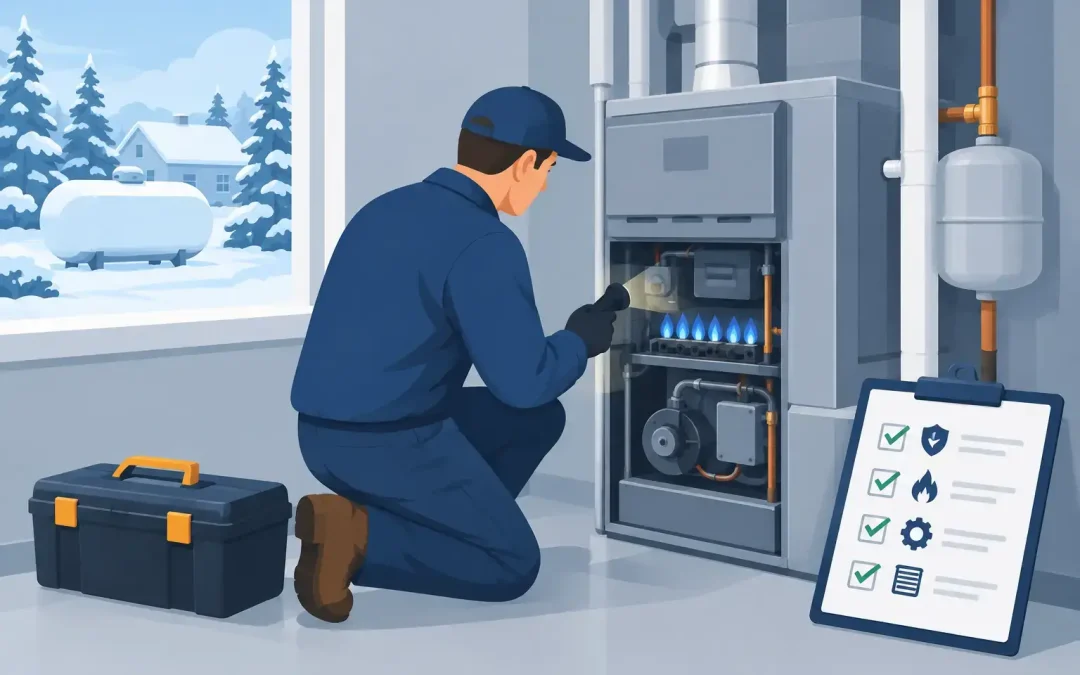
A furnace rarely chooses a convenient time to stop working. In Wisconsin and Michigan, a small issue can become a cold house quickly when temperatures drop. This propane furnace maintenance checklist helps you watch for warning signs, keep your heating system operating safely, and know when to call a trained service technician.
A little attention before and during heating season can help prevent interruptions, but propane equipment should always be treated with care. Your furnace, venting, gas connections, and controls work together. When something seems off, professional service is the right next step.
Start With a Safe, Clear Furnace Area
Begin with the space around the furnace. The area should be clean, dry, and free of stored items. Boxes, paint, cleaning products, paper, and other household belongings should never block access to the unit or sit near its burner area.
Keep the furnace room easy for a technician to reach. Clear access supports safer operation and makes seasonal service faster and more thorough. It also helps you notice leaks, moisture, unusual noises, or other changes early.
Take a moment to look for visible concerns around the equipment. Rust, standing water, loose-looking vent connections, soot marks, or a strong odor deserve prompt attention. Do not attempt to adjust gas piping, burners, regulators, or safety controls yourself. Turn off the system only if it is safe to do so, leave the area if you smell gas, and contact your propane provider or emergency services as appropriate.
Propane Furnace Maintenance Checklist for Homeowners
Some regular checks are simple observations that help protect your comfort between professional appointments. Work through this checklist at the start of the heating season and revisit it if furnace performance changes.
- Check the thermostat setting and replace its batteries if applicable. Set it to heat and make sure the display is responding normally.
- Replace or clean the furnace air filter according to the furnace manufacturer’s instructions. A clogged filter can restrict airflow, reduce comfort, and put unnecessary strain on the system.
- Make sure supply registers and return-air grilles are open and not covered by furniture, rugs, or drapes. Closed or blocked vents can lead to uneven heating.
- Test carbon monoxide alarms and smoke alarms throughout the home. Replace batteries when needed and follow the manufacturer’s replacement schedule for the alarm unit itself.
- Look outside for snow, leaves, nests, ice, or other debris near furnace intake and exhaust vents. Vent openings must remain clear so the furnace can operate properly.
- Listen for changes. Repeated clicking, banging, rattling, whistling, or frequent on-and-off cycling are reasons to schedule service.
- Notice how the heat feels. Cool air from supply vents, rooms that suddenly heat unevenly, or a furnace that runs much longer than usual can point to a developing problem.
These checks do not replace a professional furnace tune-up. They give you useful information to share when you call for service and can help catch a concern before the coldest night of the year.
Schedule Professional Service Before Heavy Winter Use
A trained technician should inspect your propane furnace regularly, ideally before you depend on it every day. Annual service is a practical choice for most households, though older equipment, high-use systems, and homes with recurring performance issues may need closer attention.
During a professional appointment, the technician can inspect components that should not be handled as a homeowner task. This often includes burner operation, ignition performance, gas pressure, safety switches, electrical connections, heat exchanger condition, condensate drainage where applicable, and venting. The technician can also check for signs of combustion or airflow issues that may not be obvious during normal operation.
Regular service can improve reliability, but it is not a guarantee that a part will never fail. Age, weather, power interruptions, and normal wear all affect heating equipment. The value of maintenance is that it reduces avoidable surprises and gives you time to make informed repair or replacement decisions.
If your furnace is approaching the end of its expected service life, ask your technician what they see. A repair may be the sensible choice when the issue is isolated and the system has otherwise performed well. Repeated breakdowns, costly repairs, rising fuel use, or inconsistent heat may make replacement worth considering.
Keep Propane Supply From Becoming a Heating Problem
A well-maintained furnace still needs a dependable propane supply. During winter, access to your property can be more difficult, and fuel use can rise sharply during a cold stretch. Watching your fuel level and planning ahead helps prevent a runout that could leave you without heat.
Automatic delivery is often the easiest option for households that want less to manage during winter. Delivery schedules are based on your expected usage and weather conditions, helping your provider plan a refill before the tank gets too low. Tank monitoring can add another layer of visibility by letting you check fuel levels from a smartphone.
If you manage deliveries manually, check your gauge regularly and order well before the tank reaches a low level. Do not wait for an emergency, especially when severe weather is in the forecast. Keeping driveways and tank access clear of snow and ice also helps delivery drivers reach the property safely.
A propane runout can require a qualified professional to perform safety checks before the system is placed back into service. That is another reason to treat fuel planning as part of furnace maintenance, not as a separate chore.
Know the Signs That Call for Immediate Help
Some furnace concerns should not wait for a routine appointment. Call for professional assistance if the furnace will not start, repeatedly shuts down, blows cool air, or trips a breaker. Also call if you see soot around the unit, notice water where it should not be, or hear unusual sounds that persist after the system starts.
If you smell propane, treat it as an urgent safety matter. Do not use electrical switches, appliances, phones, or open flames near the suspected leak. Leave the area, move away from the building, and contact your propane supplier and emergency responders from a safe location. If a carbon monoxide alarm sounds, get everyone outside into fresh air immediately and call for help.
It is always better to ask about a concern than to wait and hope it goes away. A responsive local service team can help determine whether the issue needs emergency attention or a scheduled repair.
Protect Comfort With Simple Seasonal Habits
The best maintenance routine is one you can keep up with. Mark your filter-check schedule on the calendar, test alarms when you change seasonal routines, and schedule furnace service before the first hard freeze whenever possible. If you will be away from the property in winter, arrange for someone to check the home and make sure your fuel plan is in place.
For families across northern Wisconsin and nearby Michigan communities, winter heat is more than a convenience. It protects your home, your plumbing, and the people inside. A clear furnace area, clean filter, open vents, working alarms, professional service, and dependable propane delivery all work together to keep the season more comfortable.
When your furnace gives you a reason to pause, trust that instinct. Addressing a small change early is often the simplest way to protect the warmth and peace of mind your home depends on.